
Mouse Secondary Antibodies

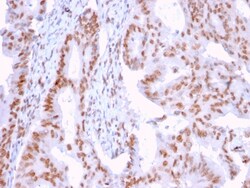
Biotium DMC1(2H12/4), CF488A conjugate, 0.1mg/mL
DNA repair proteins are necessary for the maintenance of chromosome integrity and are involved in the elimination of premutagenic lesions from DNA. The DNA repair proteins Rad51 and Rad52 are key components of the doublestrand-break repair (DSBR) pathway. Rad51 is essential for mitotic and meiotic recombination, and its mutation in yeast and mammalian cells results in chromosome loss. Overexpression of Rad52 confers resistance to ionizing radiation and induces homologous intrachromosomal recombination. Rad52 is thought to be involved in an early stage of Rad51-mediated recombination. Additional proteins involved in the pathway include Nibrin and Dmc1. Nibrin, which complexes with Mre11 and Rad50, is absent in Nijemegen breakage syndrome (NBS) patients. Dmc1 is specifically involved in meiotic recombination. An alternative spliced form of Dmc1, designated Dmc1-D, is deleted for a region between the two motifs involved in nucleotide binding. The alternatively spliced Dmc1-D transcri


Biotium Desmocollin-2/3 (7G6), Biotin conjugate, 0.1mg/mL
Desmosomes are intercellular adhering junctions that represent cell surface attachment sites for intermediate filament. The desmosome is subdivided into two regions. The plaque region lies adjacent to the plasma, and is believed to contain molecules that attach the intermediate filament cytoskeleton to the desmosome. The core region is composed of transmembrane glycoproteins that are thought to mediate cell-cell adhesion. Desmogleins and desmocollins are the main desmosomal transmembrane proteins. These desmosomal glycoproteins belong to the members of the cadherin family of adhesion molecules. Three different isoforms of both desmogleins and desmocollins have been identified, named as desmoglein 1-3 and desmocollins. Desmosomal cadherins showed differentiation-specific expression in the human epidermis, although the functional significance of this differential expression is not fully understood. Desmocollin-1 can be found in the upper layers. The expression of desmocollin-2

Biotium CD45RB(PTPRC/1132), CF647 conjugate, 0.1mg/mL
CD45R, also designated CD45 and PTPRC, is identified as a transmembrane glycoprotein, broadly expressed among hematopoietic cells. Multiple isoforms of CD45R are distributed throughout the immune system. These isoforms arise because of alternative splicing of exons 4, 5, and 6. The corresponding protein domains are characterized by the binding of monoclonal antibodies specific for CD45RA (exon 4), CD45RB (exon 5), CD45RC (exon 6) and CD45RO (exons 4 to 6 spliced out). The variation in these isoforms is localized to the extracellular domain of CD45R, while the intracellular domain is conserved. CD45RB is expressed on mature B-lymphocytes and the majority of lymphomas and leukemias of B-cell origin.Primary antibodies are available purified, or with a selection of fluorescent CF Dyes and other labels. CF Dyes offer exceptional brightness and photostability. Note: Conjugates of blue fluorescent dyes like CF405S and CF405M are not recommended for detecting low abundance targets, b
Biotium Protocadherin FAT2 (FAT Atypical Cadherin 2) (8C5), Biotin conjugate, 0.1mg/mL
This antibody recognizes a protein of 480 kDa, which is identified as FAT2. The cadherins represent a family of Ca2 -dependent adhesion molecules that function to mediate cell-to-cell binding that is critical for the maintenance of structure and morphogenesis. Cadherins each contain a large extracellular domain at the N-terminus, which is characterized by a series of five homologous repeats, the most distal of which is thought to be responsible for binding specificity. The relatively short C-terminal intracellular domain interacts with a variety of cytoplasmic proteins, including beta-catenin, to regulate cadherin function. The cadherin superfamily includes cadherins, protocadherins, desmogleins and desmocollins. FAT2 (FAT tumor suppressor homolog 2) is a single-pass type I membrane protein that belongs to the protocadherin subfamily of cadherins. FAT2 contains one Laminin G-like domain, two EGF-like domains and 32 cadherin domains and is believed to function as a cell adhesi
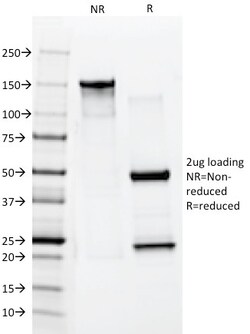
Biotium Cytokeratin 10 (Suprabasal Epithelial Marker)(AE20), CF488A conjugate, 0.1mg/mL
This MAb recognizes a protein of 56. 5 kDa, identified as cytokeratin 10 (CK10). CK10 is expressed in all suprabasal layers of the epidermis. In the epidermis, expression of CK10 strictly parallels the extent of differentiation; it is absent in the basal layer, appears in the first suprabasal layers and increases in concentration towards the granular layer. However, CK10 is rarely detected in early stages of vulvar squamous carcinomas (tumors less than 2 cm, clinical stage I) regardless of the tumor grade. In larger and more advanced tumors (greater than 2 cm, clinical stages II and III), CK10 is detected very frequently. Expression of CK10 is related to maturation of malignant keratinocytes, being preferentially detected in more-differentiated parts. Primary antibodies are available purified, or with a selection of fluorescent CF Dyes and other labels. CF Dyes offer exceptional brightness and photostability. Note: Conjugates of blue fluorescent dyes like CF405S and CF40
Biotium Chromogranin A(CHGA/777), CF740 conjugate, 0.1mg/mL
Chromogranin A is present in neuroendocrine cells throughout the body, including the neuroendocrine cells of the large and small intestine, adrenal medulla and pancreatic islets. It is an excellent marker for carcinoid tumors, pheochromocytomas, paragangliomas, and other neuroendocrine tumors. Co-expression of chromogranin A and neuron specific enolase (NSE) is common in neuroendocrine neoplasms. Reportedly, co-expression of certain keratins and chromogranin indicates neuroendocrine lineage. The presence of strong anti-chromogranin staining and absence of anti-keratin staining should raise the possibility of paraganglioma. The co-expression of chromogranin and NSE is typical of neuroendocrine neoplasms. Most pituitary adenomas and prolactinomas readily express chromogranin.Primary antibodies are available purified, or with a selection of fluorescent CF Dyes and other labels. CF Dyes offer exceptional brightness and photostability. Note: Conjugates of blue fluorescent dyes
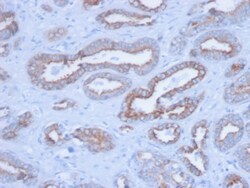
Biotium Cytokeratin, pan (Epithelial Marker)(PCK/3150), 0.2mg/mL
Anti-cytokeratin clone PCK/3150 demonstrates a broad spectrum of cytokeratin reactivity. In normal tissues, PCK/3150 is reactive with most epithelial types, including bile ducts and hepatocytes in liver, bladder epithelium, breast ducts, bronchial epithelium, endometrium, intestinal epithelium of stomach, duodenum, ileum, colon, rectum, pancreas, ovarian epithelium, pancreatic acini, pituitary acini, pneumocytes, prostate, thyroid, skin (positive on the basal layer and negative on the superficial layers of squamous epithelium), and apocrine and sweat glands. In tumors, PCK/3150 is reactive with most carcinomas, including breast, transitional cell (TCC), renal cell (RCC), lung adenocarcinoma, lung small cell, lung squamous cell, endometrial, prostate, ovarian, hepatocellular (HCC), colorectal CA, stomach and thyroid. It is negative in certain normal tissues, including brain, lymphocytes and all cells of hematolymphoid origin, muscle, brain, nerves, endothelium and in certain t

Biotium Pseudomonas aeruginosa serotype 6C(1200/472), CF740 conjugate, 0.1mg/mL
This antibody is specific for serotype 6C and does not react with other species. Pseudomonas aeruginosa is Gram-negative, aerobic, rod-shaped bacteria with unipolar motility. An opportunistic human pathogen, P. aeruginosa is also an opportunistic pathogen of plants. P. aeruginosa bacteria are clinically important because they are resistant to most antibiotics and they are capable of surviving in conditions that few other organisms can tolerate. Pseudomonas is often encountered in hospital and clinical work because it is a major cause of hospital acquired (nosocomial) infections. Its main targets are immuno-compromised individuals, burn victims, and individuals on respirators or with indwelling catheters. Additionally, these pathogens colonize the lungs of cystic fibrosis patients. P. aeruginosa is often identified by its pearlescent appearance and grape-like odor in vitro. Definitive clinical identification of P. aeruginosa includes identifying the production of both pyocyani
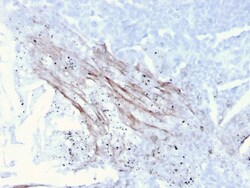
Biotium Tenascin C (Stromal Marker for Epithelial Malignancy)(TNC/3635), Biotin conjugate, 0.1mg/mL
In Western blotting, this antibody reacts with two bands of ~MW of 210 kDa and 300 kDa, identified as two isoforms of Tenascin C. Specificity of this MAb is validated by sequential immunoprecipitation with a PAb against Tenascin C. Tenascin C is a multifunctional, disulfide-linkedhexameric extracellular matrix glycoprotein expressed in association with mesenchymal epithelial interactions during development and in the neo-vasculature and stroma of undifferentiated tumors. In adults, it is restricted to certain epithelial-stromal interfaces and increases markedly in hyper-proliferative diseases and in stroma of many neoplasms, including gliomas, breast, squamous and lung carcinomas. Primary antibodies are available purified, or with a selection of fluorescent CF Dyes and other labels. CF Dyes offer exceptional brightness and photostability. Note: Conjugates of blue fluorescent dyes like CF405S and CF405M are not recommended for detecting low abundance targets, because blue

Biotium Factor XIIIa (Coagulation Factor XIIIA Chain) (F13A1/1447), 1mg/mL
This antibody recognizes a protein of 83 kDa, which is identified as Factor XIIIa. It has been identified in platelets, megakaryocytes, and fibroblast-like mesenchymal or histiocytic cells in the placenta, uterus, and prostate, monocytes and macrophages and dermal dendritic cells. Anti-factor XIIIa has been found to be useful in differentiating between dermatofibroma (almost all cases are positive), dermatofibrosarcoma protuberans (-/ ) and desmoplastic malignant melanoma (-). Anti-factor XIIIa positivity is also seen in capillary hemagioblastoma, hemangioendothelioma, hemangiopericytoma, xanthogranuloma, xanthoma, hepatocellular carcinoma, glomus tumor, and meningioma.Primary antibodies are available purified, or with a selection of fluorescent CF Dyes and other labels. CF Dyes offer exceptional brightness and photostability. Note: Conjugates of blue fluorescent dyes like CF405S and CF405M are not recommended for detecting low abundance targets, because blue dyes have

Meridian Life Science MAB TO VEROTOXIN II (SLT-2A)
Verotoxin II (Shiga-Like) A Subunit (SLT-2a, STX-2a)
Biotium pS2 / pNR-2 / TFF1 (Estrogen-Regulated Protein) (TFF1/2969R), 0.2mg/mL
This antibody recognizes a polypeptide of 6.5 kDa, identified as pS2 estrogen-regulated protein. Its epitope is localized between aa57-84 of human pS2 protein. pS2 is a trefoil peptide. Trefoil peptides are protease resistant molecules secreted throughout the gut that play a role in mucosal healing. These peptides contain three intra-chain disulfide bonds, forming the trefoil motif, or P-domain. pS2 is known to form dimers and this dimerization is thought to play a role in its protective and healing properties. About 60% of breast carcinomas are positive for pS2. Staining is cytoplasmic, often with localization to the Golgi apparatus. pS2 is shown to be localized in normal stomach mucosa, gastric fluid, goblet cells in the colon and small intestine, and in ulcerations of the gastrointestinal tract. Several studies have shown that pS2 is primarily expressed in estrogen receptor-positive breast tumors and it may define a subset of estrogen-dependent tumors that displays an increased
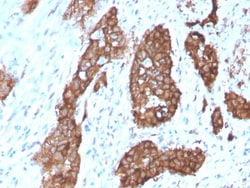
Biotium PDZ and LIM Domain 1(CPTC-PDLIM1-1), CF488A conjugate, 0.1mg/mL
CLP36, also known as PDLIM1, CLIM1 or Elfin, is a 329 amino acid cytoplasmic protein that associates with actin stress fibers at the cytoskeleton. Expressed at high levels in skeletal muscle and heart and at lower levels in colon, small intestine, spleen, lung, placenta, kidney, liver, thymus and pancreas, CLP36 functions as a cytoskeletal protein that is thought to act as an adaptor, bringing target proteins to the cytoskeleton. Specifically, CLP36 interacts with Clik1 (-actinin-1, thereby facilitating the association of Clik1 with actin stress fibers. CLP36 contains one PDZ domain and one LIM zinc-binding domain through which it conveys its protein-protein binding capabilities. Human CLP36 shares 88% sequence similarity with its rat counterpart, suggesting a conserved function between species. Primary antibodies are available purified, or with a selection of fluorescent CF Dyes and other labels. CF Dyes offer exceptional brightness and photostability. Note: Conjugates of blue
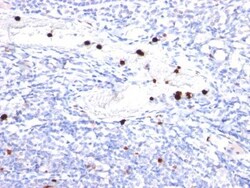
Biotium Granulocyte-Colony Stimulating Factor (G-CSF) (CSF3)(CSF3/900), CF740 conjugate, 0.1mg/mL
This MAb recognizes granulocyte-colony stimulating factor (G-CSF) in the cytoplasm of mature granulocytes. It shows no reactivity with any other cell types. Markers of myeloid cells are useful in the identification of different levels of cellular differentiation. It reacts with early precursor and mature forms of myeloid cells. It is useful for the detection of myeloid leukemias and granulocytic sarcomas. It can be used as a marker of granulocytes in normal tissues or inflammatory processes.G-CSF is a pleiotropic cytokine that influences differentiation, proliferation and activation of the neutrophilic granulocyte lineage. The human G-CSF cDNA encodes a 207 amino acid precursor containing a 29 amino acid signal peptide that is proteolytically cleaved to form a 178 amino acid residue mature protein. Two G-CSF's, which are identical except for a three amino acid deletion in the amino-terminus of one form of the protein have been isolated from human cells. Murine and human G-CSF
Biotium Muscle Specific Actin(HHF35 + MSA/953), CF740 conjugate, 0.1mg/mL
This antibody recognizes actin of skeletal, cardiac, and smooth muscle cells. It is not reactive with other mesenchymal cells except for myoepithelium. Actin can be resolved on the basis of its isoelectric points into three distinctive components: alpha, beta, and gamma in order of increasing isoelectric point. Anti-muscle specific actin recognizes alpha and gamma isotypes of all muscle groups. Non-muscle cells such as vascular endothelial cells and connective tissues are non-reactive. Also, neoplastic cells of non-muscle-derived tissue such as carcinomas, melanomas, and lymphomas are negative.It stains tumors of smooth muscle (leiomyomas and leiomyosarcomas) as well as skeletal muscle (rhabdomyomas and rhabdomyosarcomas).Primary antibodies are available purified, or with a selection of fluorescent CF Dyes and other labels. CF Dyes offer exceptional brightness and photostability. Note: Conjugates of blue fluorescent dyes like CF405S and CF405M are not recommended for detectin